
Southwest Colombia
The Western Andes of the Cali Region - the Cauca Valley, Araucana Lodge, and the Choco
May 31 - June 9, 2027
Colombia is famous among birders and naturalists for being the most bird-rich county on Earth. While that's impressive enough, so, too, is its overall biodiversity which is eclipsed only by that of Brazil.........which has the advantage of being more than seven times larger. The unique topography of the country - Pacific and Caribbean coasts, three Andean ranges, vast Amazonian forest, and the equally vast Llanos - supports a tremendous number of bird species, including about 90 endemics and over 100 near endemics. Southwest Colombia offers exceptional opportunities to see, enjoy, and learn about the country's impressive birds and wildlife as it has good tourist infrastructure, good habitat variety, and many talented Colombian people who make our trip safe, comfortable, and fun.
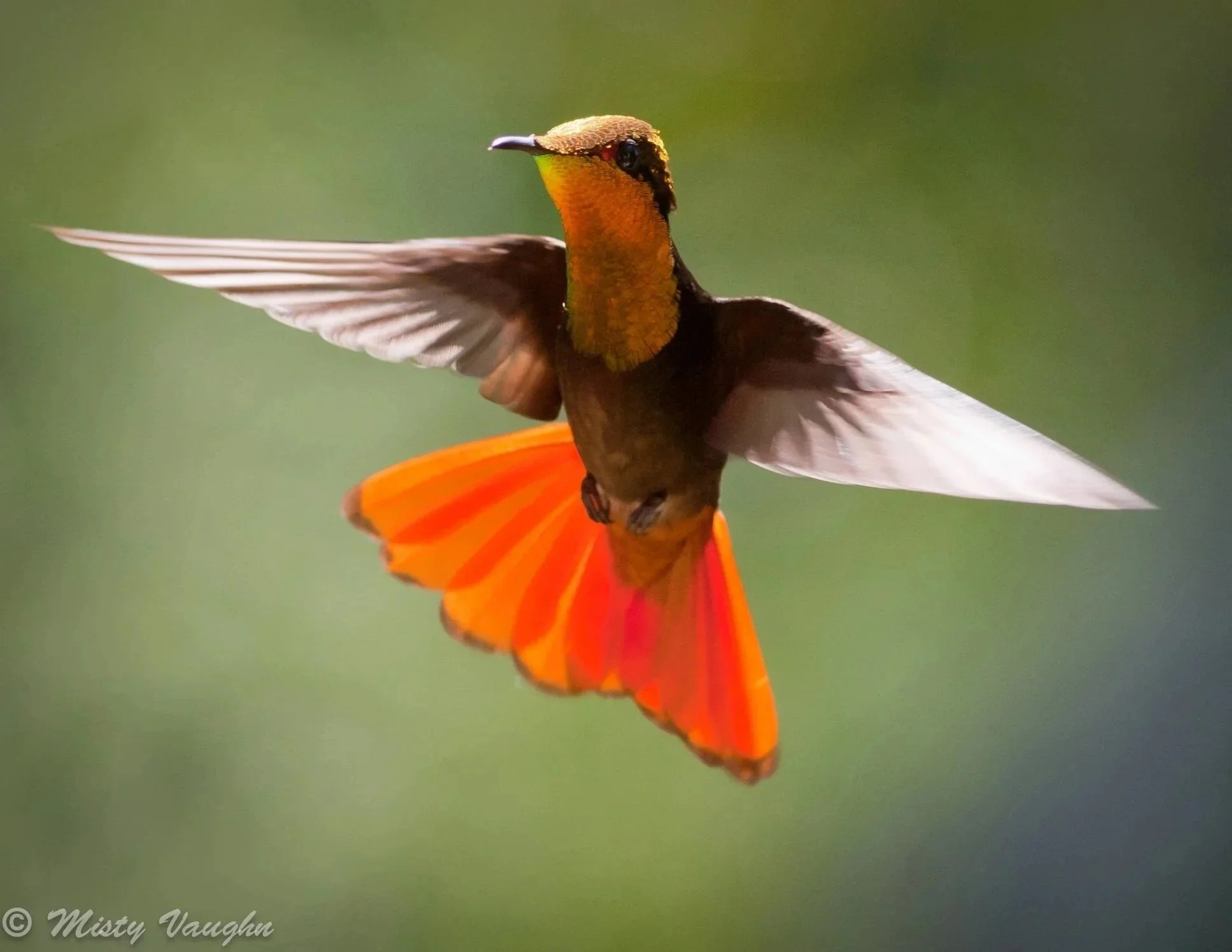
Ruby-topaz Hummingbird by Misty Vaughn
We begin this journey in the valley of the Rio Cauca, an important area that is not only home to several endemic birds but is also a key biogeographic feature in Colombia, separating the Central from the Western Andes. Here we’ll visit Laguna de Sonso, a freshwater wetland area with a large variety of birds. In addition to waders, kingfishers, horned screamer, comb duck, smooth-billed and greater anis, and whistling-ducks, we’ll look for less common species such as apical flycatcher, grayish piculet, jet antbird, little cuckoo, ruby topaz hummingbird, slaty spinetail, and others. Spectacled parrotlets are common in the area and nest on some of the visitor center buildings, offering close up views. After a few hours of easy walking along the laguna trails, we’ll take a short boat trip along the Rio Cauca to Osprey Ecolodge where we’ll have a delicious lunch. In addition to some of the same birds, we’ll have chances to see two Amazonian species that have oddly isolated populations in the Cauca Valley - masked cardinal and oriole blackbird. They sometimes have a common potoo day-roosting on the grounds.
From Cali we’ll climb into the Western Andes to the very nice Araucana Lodge which will be our home base for 7 nights. Araucana has excellent rooms, very good food, and superb service. It’s located at a comfortable 5250 feet and is in the heart of one of Colombia’s most bird-rich areas. From Araucana, we’ll make day trips to several nearby hotspots, including a few amazing feeding stations. One is La Florida which is home to specialties such as chestnut wood-quail, multicolored and many other tanagers, red-headed barbet, little tinamou, golden-headed quetzal, white-naped and chestnut-capped brushfinches, three-striped and russet-crowned warblers, and up to two dozen hummingbirds including greenish puffleg, long-tailed sylph, blue-headed sapphire, tawny-bellied hermit, white-booted racket-tail, western emerald, and bronzy inca. We’ll spend a full day in this area (which also includes the kilometer 18 road and another feeding station, Finca Alejandria), enjoying excellent forest, lots of Andean eye candy, and the warm hospitality of our hosts..
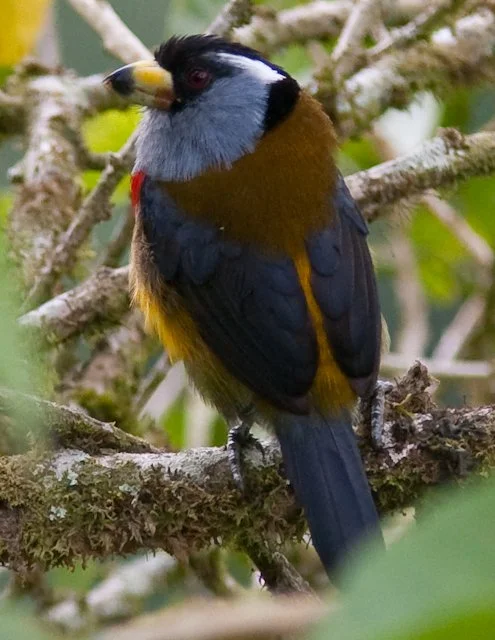
Toucan Barbet by Misty Vaughn
Another famous spot is San Cipriano, about 90 minutes to the west. Here in the Choco lowlands, we’ll enjoy outstanding lowland rainforest as we look for Baudo guan, Baudo oropendula, blue-tailed and other trogons, Choco and yellow-throated toucans, stripe-billed aracari, rose-faced parrot, spot-crowned and five-colored barbets, scarlet-and-white, rufous-winged, and blue-whiskered tanagers, black-breasted puffbird, white-ringed flycatcher, speckled mourner, golden-collared and velvety manakins, dusky and spotted antbirds, tooth-billed hummingbird, and many more - the ebird list for this location is over 400 species. We’ll spend the whole day in this area, returning to the lodge in the late afternoon. The diversity in this area is such that we may very well make two day trips here.
The upper Anchicaya Valley is yet another famous spot to the west. Here we’ll visit a well known feeding station, the Avistamiento de Aves Dona Dora. This area is a little higher than San Cipriano so we’ll have chances to see many new species, including lemon-spectacled and purplish-mantled tanagers, toucan barbet, glistening-green and rufous-throated tanagers, Choco and black-headed brushfinches, sooty-headed and bay wrens, crimson-rumped toucanet, empress brilliant, velvet-purple coronet, purple-bibbed whitetip, plain-backed antpitta, ochre-breasted tanager, Zeledon’s antbird, Pacific flatbill, lemon-browed flycatcher, and more.
An interesting and isolated patch of dry forest in the Atuncela valley, only 40 minutes from Araucana, harbors a completely different group of birds which live among the cacti, agaves, and spiny legumes. This open area offers pretty easy viewing of dwarf and dark-billed cuckoos, cinereous becard, great and bar-crested antshrikes, spectacled parrotlet, crested bobwhite, Pacific antwren, slate-headed tody-flycatcher, apical flycatcher, orange-crowned euphonia, and more.
As one of the most biologically rich countries in the world and with a landmass almost twice the size of Texas, Colombia offers many choices for traveling nature enthusiasts. The Cali region offers easy access to many special sites and provides the perfect introduction to this natural paradise. As with all of my trips, we'll do a lot more than bird listing - bird life histories and behaviors, general tropical ecology, biogeography, evolutionary biology, plants, mammals, reptiles, etc. …….and how all of this is tied together in a meaningful context.