|
|
| The Birds and natural
History of Northern Ecuador - the high Andes and the east and west slopes
With
roughly 1600 species of birds, over 16,000 known plants, and almost 400 species
of mammals, Ecuador
is one of the most biodiverse countries in the world.
Considering its relatively small size, it may harbor more species per
square mile than any other country. Ocean currents, an equatorial
latitude, and the rugged Andes combine to create
climate variations that support great biogeographic diversity as well as high
regional endemism. Coastal beaches and mangroves, lowla We’ll
begin our trip at the Jocotoco Foundation's Yanacocha Reserve where we usually
see scarlet-bellied and black-chested mountain-tanagers, great sapphirewing,
shining sunbeam, tawny antpitta and many other high elevation species. We
then continue to northwestern montane and cloud forests where
we’ll spend five days enjoying the lodges of Septimo Paraiso and Tandayapa. In addition to birding at
the lodges, we’ll also visit several private "feeding stations"
which are always an eye-candy highlight in Ecuador - Alambi Reserve, Reserva Paz
de Las Aves and the Amagusa Reserve.
In this region, we’ll find a great variety of species, including
several regional endemics. Possibilities
include bronze-winged and red-billed parrots, Choco warbler, Choco and
yellow-throated toucans, many species of tanagers (beryl-spangled, blue-necked,
golden-naped, bay-headed, rufous-throated, and more), yellow-tufted dacnis, red-faced
spinetail, toucan barbet, plate-billed mountain toucan, club-winged manakin,
Zeledon's antbird, possibly four species of antpitta, scaled and orange-breasted
fruiteaters, moss-backed and glistening-green tanagers, dark-backed woo We then make a memorable day trip to the high elevation paramo of the Antisana Reserve. In this wild area of shrubs, vast grasslands, cushion plants, and a high altitude lake, Laguna Micacocha, we’ll have good chances to see many species that we won’t find elsewhere. In the lower sections, we'll look for giant hummingbird, black-tailed trainbearer, red-crested cotinga, tufted tit-tyrant, yellow-breasted brushfinch, blue-and-yellow tanager, cinereous conebill, and black flowerpiercer. Higher up, in addition to spectacular scenery, we’ll have chances to see cinereous harrier, carunculated caracara, paramo pipit, plain-crowned (paramo) ground-tyrant, black-winged ground-dove, plumbeous sierra-finch, silvery grebe, yellow-billed pintail, Andean condor, and more. We
then travel to the eastern slope of the We’ll
next visit Cabanas San Isidro, which, at about 6500 feet, is the
transition zone
between temperate and subtropical habitats. From the comfortable
lodge, which has nice rooms and very good food, we’ll search for species that occur
only on the eastern slope as well as more widespread species.
These include speckle-face Between superb lodges, excellent food, good forest and a great diversity of habitats and species, Northern Ecuador has it all, and I can't wait to return.
Rufous-bellied
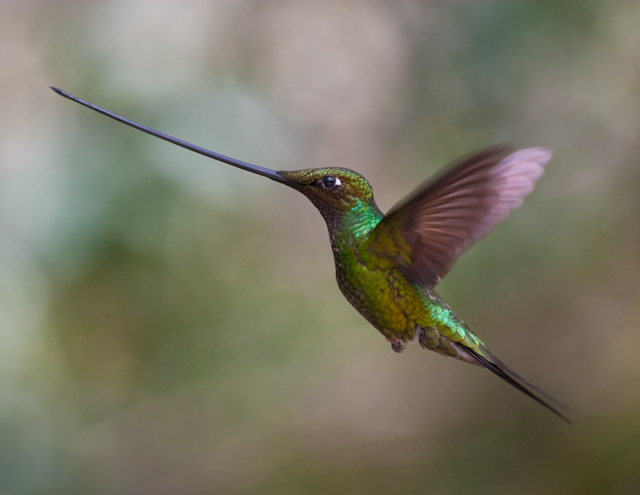
Seedsnipe,Swordbilled Hummingbird, and Blue-winged Mountain-tanager by Misty Vaughn.
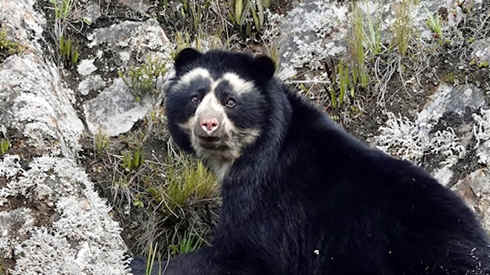
Spectacled Bear by Bettina Arrigoni |
|
|





 nd tropical
rainforest, tropical deciduous forest, the Amazon, Andean cloud forest, high
elevation paramo, and peaks
over 20,000 feet all contribute to the beauty and richness of the country.
nd tropical
rainforest, tropical deciduous forest, the Amazon, Andean cloud forest, high
elevation paramo, and peaks
over 20,000 feet all contribute to the beauty and richness of the country.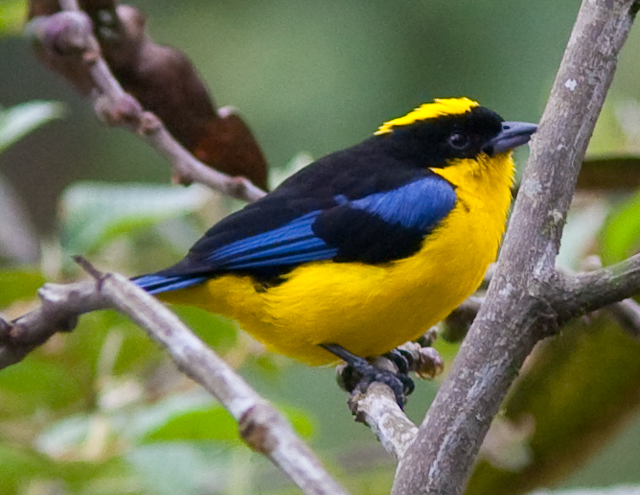 d-quail, and perhaps two dozen species of
hummingbirds.
d-quail, and perhaps two dozen species of
hummingbirds.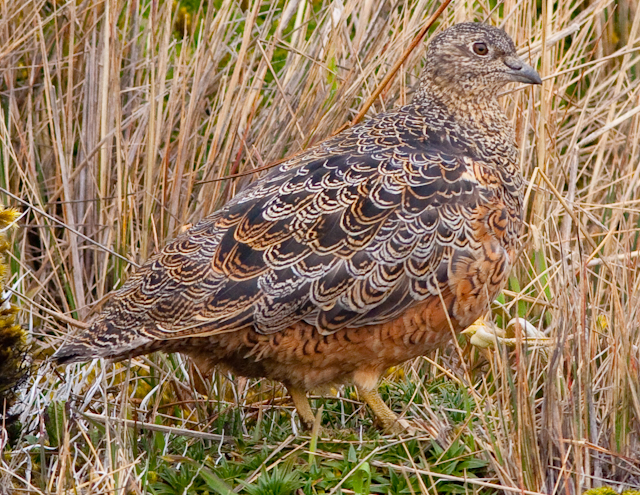 g the improbable sword-billed.
 d (white-capped) parrot, powerful woodpecker, rufous-crowned
tody-flycatcher, pale-edged flycatcher, green-and-black fruiteater, inca jay,
black-billed peppershrike, barred becard, Andean solitaire, bluish flowerpiercer,
saffron-crowned and many other tanagers, crested and golden-headed quetzals, and
as many as 10 species of hummingbirds. In
addition to white-bellied antpittas that come somewhat regularly to a worm
feeder, they occasionally have the rare Peruvian antpitta coming in.
d (white-capped) parrot, powerful woodpecker, rufous-crowned
tody-flycatcher, pale-edged flycatcher, green-and-black fruiteater, inca jay,
black-billed peppershrike, barred becard, Andean solitaire, bluish flowerpiercer,
saffron-crowned and many other tanagers, crested and golden-headed quetzals, and
as many as 10 species of hummingbirds. In
addition to white-bellied antpittas that come somewhat regularly to a worm
feeder, they occasionally have the rare Peruvian antpitta coming in.