|
|
|
With an ever-growing interest in the neotropics, a desire to be involved with conservation work somewhere south of the border, and an exciting opportunity in the southern Amazon of Brazil, my wife Karen and I left Arizona in the summer of 2004 to spend three months working as volunteer guides at the Cristalino Jungle Lodge in northern Mato Grosso. That life-changing experience surpassed even our most unrealistic expectations in terms of seeing, enjoying, and learning about the tremendous species diversity and ecology of this part of Amazonia. The place felt so much like home that we knew we had to return and did so in 2006 for a four-month stay. In addition to guiding hundreds of guests at the lodge, I've also led groups for eighteen years throughout the state on what have simply been the most wildlife rich trips I've ever done. The following is a summary of our experiences during over twenty birding and natural history trips in Mato Grosso, Brazil. Arriving
in Cuiaba, the bustling capital of Mato Grosso, in July or August, one is usually greeted
by bright blue skies Our trip begins in the Pantanal as we follow the legendary Transpantaneira, the road that traverses the northern portion of this vast seasonal wetland. In the dry months of July and August, several species of trees, shrubs, and vines are in bloom, including yellow-flowered Vochysia trees, Combretum laxum vines (one of my favorite bird magnets), several species of Ipe (Tabebuia/Handroanthus sp.), and the widespread Cassia grandis. At this time of year, the water levels in the ponds and rivers are perfect for concentrating the foods that attract birds, caiman, and otters, for providing foraging opportunities for water-edge species that need exposed banks, and for optimizing our viewing opportunities. The roughest part of the Transpantaneira isn't the dirt surface but rather the challenge of trying to drive more than a few miles without having to stop to marvel at this or that species. The New World's three stork species - jabiru, wood stork, and Maguari stork - are often roadside fixtures as are four species of ibis (plumbeous, buff-necked, bare-faced, and green), Toco toucan, Campo flicker, greater rhea, rufous hornero, greater thornbird, monk and yellow-chevroned parakeets, unicolored blackbird, troupial, white-headed marsh tyrant, scarlet-headed blackbird, Chaco chachalaca, chestnut-bellied guan, and the local stars, hyacinth macaws. Not as common as these "fixtures" are other species that we've seen including red-legged seriema, red-winged tinamou, white-naped xenopsaris, and nanday and blue-crowned parakeets. By the time we reach Fazenda Santa Tereza, we're usually closing in on 100 species for the day. Santa Tereza, resting on the banks
of the Pixaim River, is simply loaded with birds and wildlife.
In addition to an occasional family of giant otters on the river, we've seen crab-eating
fox, red brocket and marsh deer, South American coati, southern tamandua,
capybara, black howler and Azara's capuchin monkeys, silvery marmoset, and other mammals on or near
the grounds. One of the great mammalian prizes in the region is the giant
anteater, an odd and beautiful animal that, as an adult, has few, if any,
predators. Though it's uncommon in the area, we've been lucky several
times with close up encounters. Another hard to see mammal is the ocelot,
but, in recent years, Santa Tereza has had partially habituated individuals coming to an area with
a blind where this small and widespread cat can be seen remarkably
well. The Pantanal also hosts one of the largest populations of
jaguars anywhere in the Americas, and while we have serendipitously come across this spectacular felid on the
Rio Pixaim boat trips, we also make a special day trip south to Porto Jofre
where multiple sightings are pretty much guaranteed at this time of year (we've
never failed to se them yet). From Santa Tereza, we head north to Pousada Piuval, a lovely and comfortable lodge with different habitat and species than we find further south. The open fields around the lodge are ideal for viewing large groups of greater rheas (sometimes we see attentive dads herding long-legged young) as well as eared dove, aplomado falcon, grey-cowled wood-rail, yellowish pipit, South American snipe, sunbittern, marsh seedeater, Brazilian teal, and occasionally undulated tinamou crossing between forest patches. In the nearby forest and adjacent to the lagoon we've had good luck in finding the rare spot-backed puffbird as well as saffron-billed sparrow, yellow-collared macaw, scarlet-headed blackbird, great rufous woodcreeper, black-bellied antwren, pale-crested woodpecker, and white-fronted woodpecker, a rarity in Brazil. From the
Pantanal, we ret After
a relaxing night and a morning of birding at the hotel, we head out for my
adopted home in Brazil, the Cristalino Jungle Lodge. Along the way we look
for Brazilian teal, pearl kite, burrowing owl, and, at a stand of Mauritia
palms, the "Mauritia palm grand slam", a quartet of birds
including red-bellied macaw, fork-tailed palm-swift, sulphury flycatcher, and
point-tailed palmcreeper. While we almost always see the first three of
these, the palmcreeper can be a challenge, but we've had reasonably good luck in
seeing it on over half the visits. Eventually we reach the banks of the
Rio Teles Pires and the beginning of gorgeous forest that goes on essentially
intact for hundreds of miles to the Amazon itself. Leaving behind all
roads, cars, houses, fences, livestock, and exotic species, the magic is obvious
as we cross the Teles Pires and enter the beautiful Rio Cristalino. The
Cristalino is a 100-mile long river weaving its way through pristine lowland
Amazonian rainforest. The trail system, the canopy towers, and the lodge's
boats give us access to every microhabitat found in the area. Yes, the
birds and other wild creatures are outstanding, but even the most intense life-lister
will be mesmerized by the mind-boggling number of butterflies by day and stars
by night. The July/August time period is a peak for butterflies with
thousands of sulphurs of several species streaming down the river for hours each
day, occasionally stopping to form large "puddle parties" of many
hundreds along the banks. In the forest, our eyes are almost constantly
distracted by darting satyrs, hairstreaks, metalmarks, owls, skippers, and
morphos. The isolation and absence of light-pollution at the lodge can
sometimes make for a cosmic display that I didn't think was possible except from the space
shuttle. Even though the sky may be completely clear at Cristalino, a
staggering number of stars creates the illusion of wispy cloud patches scattered
across the sky. At Cristalino, birders are
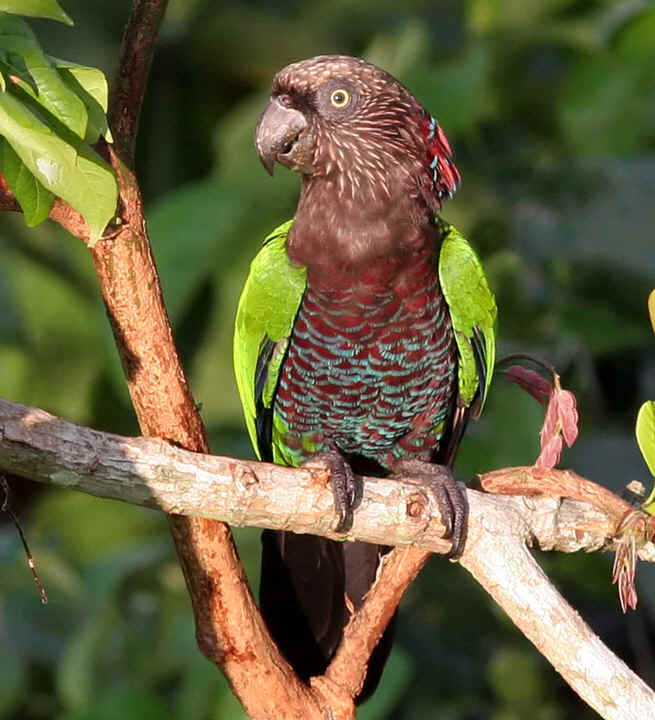
treated to the full lowland Amazonian show with eight species of toucans, more
than twenty species of parrots, several striking cotingas, seven trogons, six
jacamars, nineteen woodcreepers, and over fifty species of antbirds. The
diversity is tremendous, but, as elsewhere in thick tropical forest, the birding
can be challenging. With some preparation, practice, a little luck, and,
above all, patience, one can In the adjacent
flooded forest are birds that specialize in this unique habitat.
Long-billed, striped, and straight-billed woodcreepers work the treetrunks, male
flame-crowned manakins call from their inconspicuous perches, Amazonian streaked antwren
pairs work
the lower trees, glossy antshrikes give their "bouncing ball" calls,
and diminutive spotted tody-flycatchers glean from the undersides of leaves.
As one heads up river, the gradient becomes more gradual, the floodplain widens,
and the structure and species composition of the vegetation changes. In
these "swampy" areas one can sometimes find hoatzins, a beautiful but
rather odd leaf-eating bird, as well as lesser kiskadee, varzea schiffornis,
Amazonian antpitta, and black-capped donacobius. An upriver Mauritia
palm swamp provides a second chance for the "grand slam" specialists. Of
course, most of the harder-to-see goodies are either in the forest, where the
excellent trail system allows good access, or in the canopy, where the lodge's
two towers become a birder's best friend. The forest birds can be roughly divided
into two groups - the mixed flock followers and the individualists. The
mixed flock followers tend to be smallish insectivores that gain various
foraging and predator-avoidance benefits by traveling in groups. The
individualists, on the other hand, have morphologies and behaviors such that
group traveling isn't beneficial. They tend to be either ground dwellers
(like tinamous and antthrushes), fruit-eaters (such as manakins and cotingas) or
sit-wait-ambush predators (think trogons, flycatchers and jacamars).
While walking Cristalino's trails, I've always got my radar on high, with a
special focus on the machine-gun-like rallying call of the cinereous antshrike,
the understory mixed flock leader. Though there is almost always a central
cast of characters in such a flock (long-winged antwren, rufous-rumped folia Among the non-flockers are seven species of trogons, most of which tend to perch rather high compared to the easy-to-see elegant trogons just a few miles from my house. While black-tailed, green-backed, and Amazonian trogons are fairly common, the sparsely distributed pavonine quetzal is a rare treat. Cristalino's six species of jacamars present one of the finest examples of adaptive radiation to be found anywhere. With similar morpholgies and foraging behaviors, they partition habitat by location. Each has its reliably specific place in the overall picture - rufous-taileds along the river edge, blue-cheeked in the forest mid-story, paradise above the canopy, great just under the canopy, bronzy in areas of dense flooded forest, and brown on disturbed edges. Army
ants (Eciton sp.) are a habitat unto themselves. Their nomadic
lifestyles, their insect-flushing swarm-foraging, and their ubiquitousness
has led to the evolution of interesting dependencies and associations in various
organisms. In
addition to the professional antbirds found at Cristalino (black-spotted
bare-eye, Xingu scale-backed antbird, white-chinned and plain-brown woodcreepers, and
the endemic bare-eyed antbird), we've found unexpected ant-following opportunists
such as Spix's guan, black-girdled barbet, cryptic forest-falcon, strong-billed woodcreeper, and even
white-throated toucan! Just as tightly tied to the ants, but not as easily
seen, are insects such as skipper butterflies (following the birds for their
nutrient rich droppings), parasitic flies and wasps (hoping to pounce and lay an
egg on escaping arthropods), and a suite of commensal beetles and other insects
that live with the ants. The
two 50-meter canopy towers are a dream come true, not just for the wildlife-viewing,
but also for the awesome views they provide of the vast intact forest.
The towers also have the added benefit of reinforcing and refining that
oh-so-important birding tool, patience. There are always birds to be seen
from the towers, but numbers and diversity vary with the shifting resources of
fruits and flowers. Spangled and pompadour cotingas, long-tailed tyrant, many parrots,
variegated and crowned-slaty flycatchers, swallow-tailed and plumbeous kites,
black-girdled barbet, and several toucans are pretty regular
as are white-cheeked spider and brown capuchin monkeys. What are not so
regular are the mixed canopy flocks that everyone wants to see. There's a
lot of canopy out there, and you never know where the flocks are going to be,
but every now and then, one of these nomadic bands of hungry birds gets close to
one of the towers and Other highlights at Cristalino include "island" outcrops of old weathered granite where the lack of soil favors arid adapted species of trees, shrubs, forbs, and a few native bunchgrasses, almost none of which occur in the surrounding forest. One prominent nearby hill has a trail to the top that provides access not only to a terrific view but also to rocky outcrop specialties such as Natterer's slaty-antshrike, white-fringed antwren, yellow-browed antbird, and blackish nightjar. The many blooming Erythrina trees in July and August attract black-throated mangos, white-chinned and rufous-throated sapphires, versicolored emerald, amethyst woodstar, and occasionally black-bellied thorntail and the rare fiery-tailed awlbill, while Cochlospermum, Pseudobombax, and Tabebuia trees attract other pollinators as well as parrots. In recent years, one of the local guides, Francisco Souza (who has worked at the lodge since its beginning), has set up a nicely lit water feature well back in the forest where many species come in to bathe and drink in the late afternoon. The list of birds that come in close to where we sit are arranged is long and amazing - bare-eyed antbird, black-spotted bare-eye, snow-capped and white-crowned manakins, cinereous and saturnine antshrikes, Xingu scale-backed antbird, white-winged shrike-tanager, white-chinned woodcreeper, rufous-rumped foliage-gleaner, and about 20 other avian gems (not to mention mammals like giant anteater and red brocket deer). In my opinion, what Francisco has created is a National Geographic level wildlife viewing experience. I
could go on for days about the wonders of Cristalino's forest as it is filled with
so many species and sights that surprise and amaze. A short list of the
special critters that we've had the good luck to find include many mammals -
tayra,
white-lipped and collared peccaries, both gray and red brocket deer, southern
tamandua, seven species of primates, southern two-toed sloth, kinkajou, South
American coati, Guianan squirrel, multiple bat species (long-no A welcomed contrast to the extensive deforestation seen south of Cristalino is the excellent work of the Cristalino Ecological Foundation, a private, non-profit conservation organization established in 1999 to help protect the forest near the lodge and beyond. In addition to facilitating the establishment of Cristalino State Park in 2000, the Foundation has made possible the purchase and protection of a 16,000-acre private inholding within the park and created an environmental education program for Brazilian children (The School of the Amazon). The owner of the lodge and founder of the foundation, Dona Vitoria da Riva Carvalho, is skilled and tireless in her efforts and, to many of us, is a national treasure. From Cristalino, we return south to Cuiaba from where we make the short drive north to Chapada dos Guimaraes National Park. Chapada lies on the southern end on the Mato Grosso Planalto. Here broadleaf forest like that of the Amazon fingers its way between fire-adapted cerrado and grasslands. All are woven into a dramatic landscape with many streams and waterfalls and dramatic sandstone cliffs. In
Chapada, we stay at the wonderful Pousada do Parque from where day trips
take us to the low-stature cerrado of the
Geladeiras Road and the tall forest of the
Vale da Bencao Road as well as grassland and broken forest areas. At first glance the
Geladeiras Rd., with its somewhat
scrawny-looking shrubs, doesn't look all that promising for birds.
Fortunately, in this case, looks are indeed deceiving as the area is a gold mine
of avian jewels. Flowering Calliandra and Bauhinia shrubs
are good places to look for some amazing hummers - horned sungem, swallow-tailed
hummingbird, glittering-bellied emerald, and white-vented violet-ear. Gray
monjita, white-banded and white-rumped tanagers, black-throated saltator, and
white-eared puffbird are the species The
flora of the Geladeiras Rd. is fascinating.
In addition to the Calliandra and Bauhinia that flower in July and
August, Melastomes (a widespread neotropical plant family) are abundant
and diverse. A plant I've seen in the sandy savannas of southern Mexico
and Belize, Curatella The thick forest of the Vale de Bencao Rd., while bordering the low-stature cerrado, is a far southern extension of Amazonia and has a very different avifauna. Along this quiet road one can find both saffron-billed and pectoral sparrows working the ground and channel-billed toucan and chestnut-eared and lettered aracaris in the treetops. Guira tanager, sibilant sirystes, Planalto woodcreeper, Amazonian motmot, long-billed gnatwren, Tapajos (white-backed) fire-eye, moustached and thrush-like wrens, and many others are also found here. The calls of fiery-capped and band-tailed manakins are common, though finding the birds themselves is more of a challenge. On particularly lucky days, we've found southern antpipit and both pheasant and pavonine cuckoos. On
the grounds of Pousada do Parque itself, there is excellent wild The lodge trails and a nearby pond provide opportunities to see many interesting birds, and we've had good luck in the past seeing masked yellowthroat, saffron-billed sparrow, three species of manakin (helmeted, fiery-capped, and band-tailed), blue-crowned trogon, rusty-fronted tody-flycatcher, swallow tanager, brown jacamar, wedge-tailed grass-finch, sooty-fronted spinetail, Planalto hermit, sharp-tailed streamcreeper, russet-crowned crake, and white-eared puffbird. We sometimes make visits to the Veu da Noiva falls, where cerrado, grassland, and riparian forest create a diverse blend of habitats, as well as the dramatic lookout at the Alto de Ceu, a scenic spot with expansive views. At these spots, biscutate and great dusky swifts, green-winged saltator, blue finch, crested black tyrant, stripe-tailed yellow-finch, and several seedeater species - double-collared, plumbeous, and tawny-bellied - are sometimes seen. At some point, and I think I've reached it, words just come up short in trying to describe the ambiance - the light, the color, the sounds, and the sights - of a trip through Mato Grosso's riches. This central South American area is an E-ticket ride for those with an interest in the natural world, and, as one of my favorite places on the planet, it's a place that I greatly look forward to returning to and sharing with many of you. Photos:
|
|
|



 and comfortably warm temperatures, the perfect climate
for enjoying nature. Mato Grosso, situated roughly in the middle of South
America, is a rich biogeographical crossroads where three major biomes
converge. In the south is the world's largest seasonal freshwater wetland, the
Pantanal; running across the middle of the state is the dryish cerrado; and in
the far north is Amazonia. With each habitat offering a unique blend of
scenery, flora, and fauna, Mato Grosso provides a world class wildlife
experience.
and comfortably warm temperatures, the perfect climate
for enjoying nature. Mato Grosso, situated roughly in the middle of South
America, is a rich biogeographical crossroads where three major biomes
converge. In the south is the world's largest seasonal freshwater wetland, the
Pantanal; running across the middle of the state is the dryish cerrado; and in
the far north is Amazonia. With each habitat offering a unique blend of
scenery, flora, and fauna, Mato Grosso provides a world class wildlife
experience. 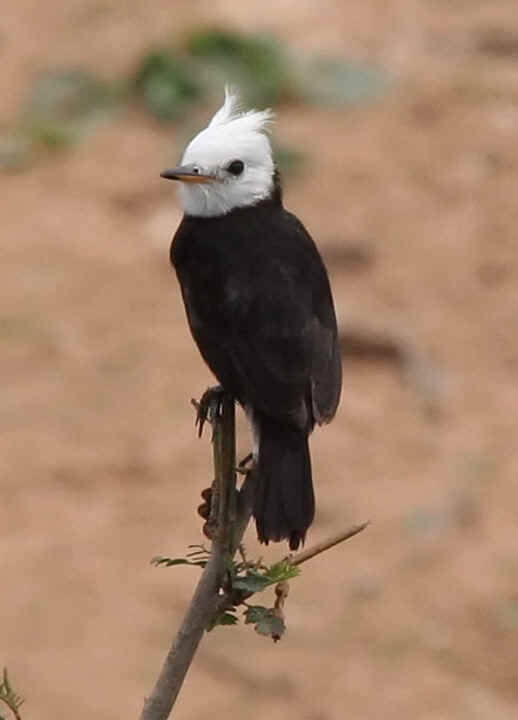 enging in
terms of viewing. We've had good luck in these forests and
have enjoyed great views of Mato Grosso and band-tailed antbirds, rusty-fronted
tody-flycatcher, pearly-vented tody-tyrant, fuscous flycatcher, helmeted manakin,
green-backed becard, dark-billed cuckoo, hooded tanager, ashy-headed greenlet,
plain tyrannulet, red-billed scythebill,
masked gnatcatcher, flavescent warbler, dull-capped attila, and rusty-backed antwren.
Along the forest edges are
rufous-fronted and greater thornbirds, rufous cachalote, and the uncommon
white-banded mockingbird, while in the wetter areas,
we find yellow-chinned and rusty-backed spinetails. Night in the Pantanal,
though not as busy as the day, can still be pretty exciting for wildlife. After the sun has set, but before darkness takes over,
band-tailed and Nacunda nighthawks take to the sky,
while great-horned owls (yes, they do occur this far south) begin their
"day" with calls reminiscent, but different from, those of their
northern cousins. Widespread birds such as common pauraque and ferruginous
pygmy owl are joined by not-so-widespread birds like scissor-tailed nightjar
whose insect-hawking flights are spectacular. In addition to the many
caiman (Caiman jacare) in the area, we've also seen several other large
reptiles, notably the prehistoric looking caiman lizard (Dracaena
paraguayensis), a
spectacularly large snail-eater, and the black and white tegu (Tupinambus merianae). Our afternoon boat
trips
along the Pixaim River, a tributary of the larger Cuiaba River, are magical. The tropical light, the thick gallery forest bordering the river,
and the quiet create an ambiance so satisfying that the wildlife we see
almost seems like a bonus............but what a bonus - agami heron, bare-faced curassow, sungrebe, five species of
kingfisher (including pygmy and green-and-rufous), pale-legged
hornero, whistling heron, solitary black cacique, yellow-collared macaw, and
white-faced whistling-duck are wonderful preludes to one of the trip's possible highlights, close-up views of a
group giant river otters.
As we return after sunset, band-tailed nighthawks emerge, flying over the river
often in large numbers. One year, we were approaching what appeared to be
a very large concentration of over 100 of these birds. As we got
closer and eventually were at the center of the swirling animals, we realized
that they were lesser bulldog bats, an insectivorous cousin of the greater
bulldog bat (which eats fish). Yet another amazing Mato Grosso moment. While at Santa Tereza, we're
treated to excellent hospitality and delicious food which, together with the
wildlife, make for an unforgettable experience.
enging in
terms of viewing. We've had good luck in these forests and
have enjoyed great views of Mato Grosso and band-tailed antbirds, rusty-fronted
tody-flycatcher, pearly-vented tody-tyrant, fuscous flycatcher, helmeted manakin,
green-backed becard, dark-billed cuckoo, hooded tanager, ashy-headed greenlet,
plain tyrannulet, red-billed scythebill,
masked gnatcatcher, flavescent warbler, dull-capped attila, and rusty-backed antwren.
Along the forest edges are
rufous-fronted and greater thornbirds, rufous cachalote, and the uncommon
white-banded mockingbird, while in the wetter areas,
we find yellow-chinned and rusty-backed spinetails. Night in the Pantanal,
though not as busy as the day, can still be pretty exciting for wildlife. After the sun has set, but before darkness takes over,
band-tailed and Nacunda nighthawks take to the sky,
while great-horned owls (yes, they do occur this far south) begin their
"day" with calls reminiscent, but different from, those of their
northern cousins. Widespread birds such as common pauraque and ferruginous
pygmy owl are joined by not-so-widespread birds like scissor-tailed nightjar
whose insect-hawking flights are spectacular. In addition to the many
caiman (Caiman jacare) in the area, we've also seen several other large
reptiles, notably the prehistoric looking caiman lizard (Dracaena
paraguayensis), a
spectacularly large snail-eater, and the black and white tegu (Tupinambus merianae). Our afternoon boat
trips
along the Pixaim River, a tributary of the larger Cuiaba River, are magical. The tropical light, the thick gallery forest bordering the river,
and the quiet create an ambiance so satisfying that the wildlife we see
almost seems like a bonus............but what a bonus - agami heron, bare-faced curassow, sungrebe, five species of
kingfisher (including pygmy and green-and-rufous), pale-legged
hornero, whistling heron, solitary black cacique, yellow-collared macaw, and
white-faced whistling-duck are wonderful preludes to one of the trip's possible highlights, close-up views of a
group giant river otters.
As we return after sunset, band-tailed nighthawks emerge, flying over the river
often in large numbers. One year, we were approaching what appeared to be
a very large concentration of over 100 of these birds. As we got
closer and eventually were at the center of the swirling animals, we realized
that they were lesser bulldog bats, an insectivorous cousin of the greater
bulldog bat (which eats fish). Yet another amazing Mato Grosso moment. While at Santa Tereza, we're
treated to excellent hospitality and delicious food which, together with the
wildlife, make for an unforgettable experience.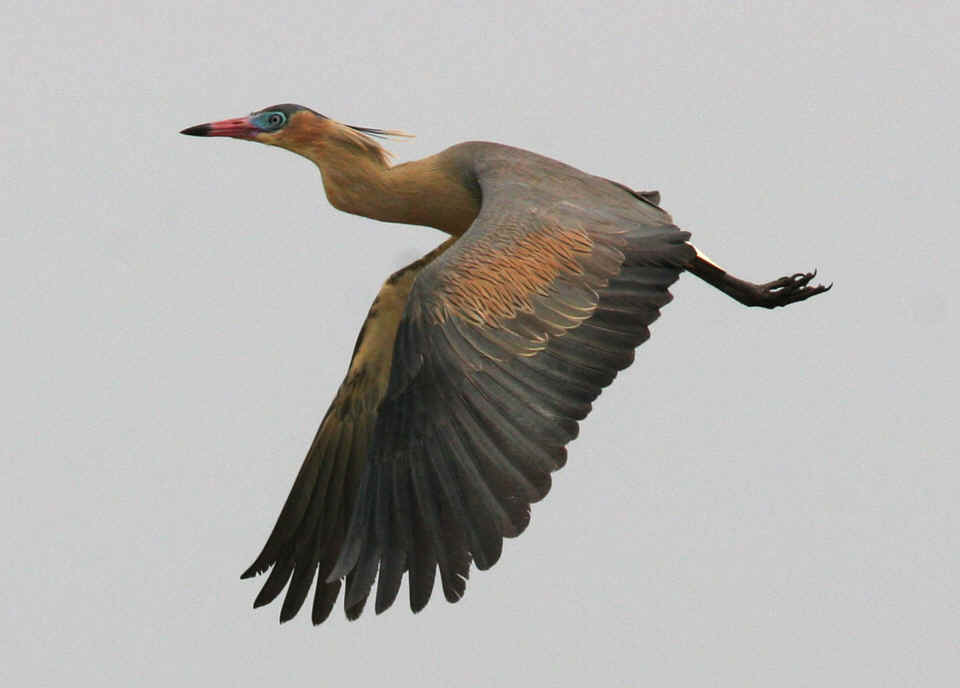 urn to Cuiaba for the one-hour flight to Alta Floresta and an
entirely different world. Forty to fifty years ago, when the town of Alta
Floresta was established, its name described the surrounding landscape of
"high forest". Today the area around and to the south of Alta Floresta
is the poster-landscape for deforestation in South America as cattle pasture and
soybean farms have replaced large tracts of broadleaf evergreen forest.
Amazingly, the small tract of forest that remains at the Hotel Floresta
Amazonica still harbors some wildlife, the most unexpected of which has to be
the pair of harpy eagles that nested there successfully in 2006, 2009, and 2012.
We've also found avian gems like long-tailed potoo, crested owl, chestnut-tailed
antbird, dark-winged trumpeter, short-tailed pygmy-trant, and cinnamon-throated
woodcreeper. Mammals include red howler, red-bellied-titi, and Peruvian spider
monkeys as well as silvery marmoset. On the forest edges are blue-crowned, black-tailed,
and white-tailed trogons, several tityras, bare-necked fruitcrow, squirrel cuckoo, and
about 15 species of parrots. In July and August a striking species of red Passiflora
is in full bloom, sometimes drawing in reddish hermits.
urn to Cuiaba for the one-hour flight to Alta Floresta and an
entirely different world. Forty to fifty years ago, when the town of Alta
Floresta was established, its name described the surrounding landscape of
"high forest". Today the area around and to the south of Alta Floresta
is the poster-landscape for deforestation in South America as cattle pasture and
soybean farms have replaced large tracts of broadleaf evergreen forest.
Amazingly, the small tract of forest that remains at the Hotel Floresta
Amazonica still harbors some wildlife, the most unexpected of which has to be
the pair of harpy eagles that nested there successfully in 2006, 2009, and 2012.
We've also found avian gems like long-tailed potoo, crested owl, chestnut-tailed
antbird, dark-winged trumpeter, short-tailed pygmy-trant, and cinnamon-throated
woodcreeper. Mammals include red howler, red-bellied-titi, and Peruvian spider
monkeys as well as silvery marmoset. On the forest edges are blue-crowned, black-tailed,
and white-tailed trogons, several tityras, bare-necked fruitcrow, squirrel cuckoo, and
about 15 species of parrots. In July and August a striking species of red Passiflora
is in full bloom, sometimes drawing in reddish hermits. 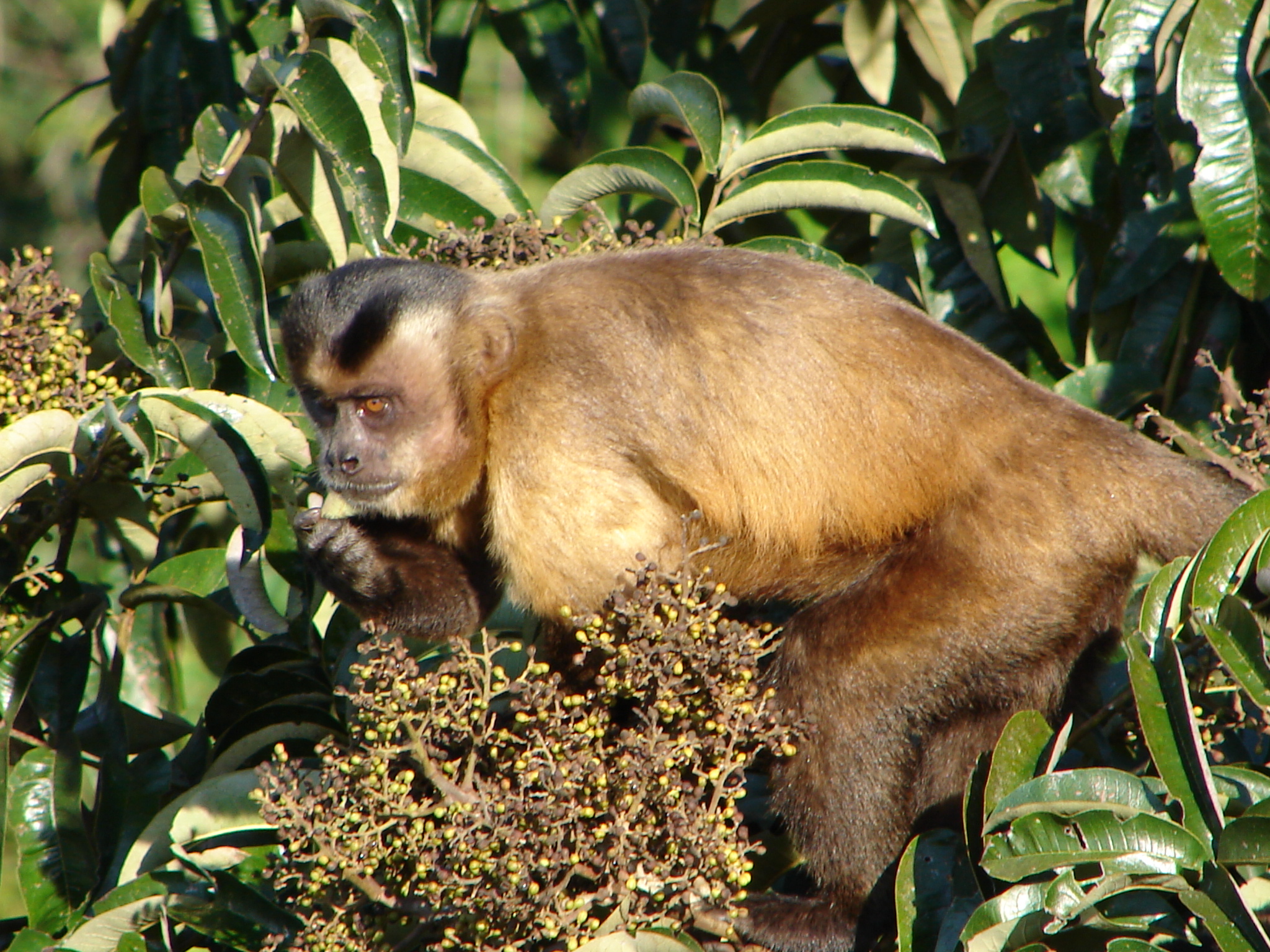 see up to several hundred species in a 5-day stay.
Having spent many months at Cristalino, I've had the good fortune of becoming familiar with bird behaviors, vocalizations, and territories which
helps in finding both the common and rare species. With almost 600 species
recorded in the Alta Floresta/Cristalino area,
it's hard to know where to begin. The river itself is marvelous for
relatively easy viewing. Overhead one can see soaring raptors such as
black-and-white hawk-eagle or hook-billed kite while perched raptors have included
gray-bellied hawk, crested and harpy eagles, and white-browed hawk. Macaws and
parrots (including the endemic Kawall's) fly by,
occasionally perching to give good views. While golden-winged parakeets
sometimes come down to the river rocks to eat snails, groups of dusky-billed
parrotlets come to the lodge beach to eat clay at midday. Muscovy ducks,
sunbittern, great black hawk, Amazon and green-and-rufous kingfishers, and green ibis are fairly common. Water edge specialists include
silvered and band-tailed antbirds, and buff-breasted wren. July and August
are two of the best months to see rare razor-billed curassows as they come down
to the water's edge. In addition to various primates (white-cheeked
spider, brown capuchin, white-nosed saki, and red-handed howler monkeys)
we sometimes see Brazilian tapir, neotropical and giant otters, capybara, and
proboscis bats on the river by day while paca and greater and lesser fishing bats
can be seen
at night. Spectacled and dwarf caiman, and yellow-spotted river and
spotted toad-headed turtles are common baskers along the banks and logs.
Green anacondas are sometimes found along the river's edge, and in 2006 we saw
about ten individuals, including the 20+ ft. beast that we saw in 2004.
Though they are forest animals, your best chance for seeing a jaguar at
Cristalino is along the river. Fortunately we've been in the right place
at the right time on three unforgettable occasions, and you can see what we saw in
the photos here and in the photo gallery.
see up to several hundred species in a 5-day stay.
Having spent many months at Cristalino, I've had the good fortune of becoming familiar with bird behaviors, vocalizations, and territories which
helps in finding both the common and rare species. With almost 600 species
recorded in the Alta Floresta/Cristalino area,
it's hard to know where to begin. The river itself is marvelous for
relatively easy viewing. Overhead one can see soaring raptors such as
black-and-white hawk-eagle or hook-billed kite while perched raptors have included
gray-bellied hawk, crested and harpy eagles, and white-browed hawk. Macaws and
parrots (including the endemic Kawall's) fly by,
occasionally perching to give good views. While golden-winged parakeets
sometimes come down to the river rocks to eat snails, groups of dusky-billed
parrotlets come to the lodge beach to eat clay at midday. Muscovy ducks,
sunbittern, great black hawk, Amazon and green-and-rufous kingfishers, and green ibis are fairly common. Water edge specialists include
silvered and band-tailed antbirds, and buff-breasted wren. July and August
are two of the best months to see rare razor-billed curassows as they come down
to the water's edge. In addition to various primates (white-cheeked
spider, brown capuchin, white-nosed saki, and red-handed howler monkeys)
we sometimes see Brazilian tapir, neotropical and giant otters, capybara, and
proboscis bats on the river by day while paca and greater and lesser fishing bats
can be seen
at night. Spectacled and dwarf caiman, and yellow-spotted river and
spotted toad-headed turtles are common baskers along the banks and logs.
Green anacondas are sometimes found along the river's edge, and in 2006 we saw
about ten individuals, including the 20+ ft. beast that we saw in 2004.
Though they are forest animals, your best chance for seeing a jaguar at
Cristalino is along the river. Fortunately we've been in the right place
at the right time on three unforgettable occasions, and you can see what we saw in
the photos here and in the photo gallery.
 puts on quite a show of color and movement. The
action and ID challenges can be intense as chestnut-winged hookbill,
yellow-shouldered grosbeak, Sclater's antwren, spot-winged antshrike,
black-bellied cuckoo, tooth-billed wren, white-lored tyrannulet, gray-crowned
flycatcher, dusky-capped (lineated) woodcreeper, dusky-capped greenlet, paradise tanager, and
others weave and dart their way through the trees. In July and August a tree
close to the older tower, a species of Xanthoxylum, has fruits that are
oddly irresistible to many birds as well as capuchin monkeys. I say oddly
because the clusters of fruits are comprised of leathery green capsules, which, when split open,
reveal pulpless black seeds. While the
cluster has a mildly sweet perfume odor, the seeds, when touched by the human
tongue, leave a caustic sensation rather like battery acid. Thus the
oddness and the mystery of why red-headed, dwarf-tyrant, and white-crowned
manakins, large groups of white-eyed parakeets, crowned-slaty and other
flycatchers, two species of dacnis, and
scale-breasted woodpecker are regular seed-eating visitors. Part of the
mystery's solution may have something to do with the fact that there is an Asian
species of Xanthoxylum that is used by people as both a spice and an
anti-gut-parasite
medicine. Perhaps our tower Xanthoxylum is just the neighborhood pharmacy, open for only one month a year. Also near the tower
are several Erythrina trees that bloom at this time and are attractive to
epaulet orioles, several parakeets (crimson-bellied and Santarem), and
hummingbirds like black-eared fairy and gray-breasted sabrewing. Finally
there's the "dead snag", a hardwood near the tower that died many
years ago but remains standing, much to the delight of the many birds that
occasionally perch on, hunt from, or nest in it. These include long-tailed
tyrant, black-crowned tityra, Amazonian pygmy owl, red-necked and curl-crested
aracaris, and several parrots.
puts on quite a show of color and movement. The
action and ID challenges can be intense as chestnut-winged hookbill,
yellow-shouldered grosbeak, Sclater's antwren, spot-winged antshrike,
black-bellied cuckoo, tooth-billed wren, white-lored tyrannulet, gray-crowned
flycatcher, dusky-capped (lineated) woodcreeper, dusky-capped greenlet, paradise tanager, and
others weave and dart their way through the trees. In July and August a tree
close to the older tower, a species of Xanthoxylum, has fruits that are
oddly irresistible to many birds as well as capuchin monkeys. I say oddly
because the clusters of fruits are comprised of leathery green capsules, which, when split open,
reveal pulpless black seeds. While the
cluster has a mildly sweet perfume odor, the seeds, when touched by the human
tongue, leave a caustic sensation rather like battery acid. Thus the
oddness and the mystery of why red-headed, dwarf-tyrant, and white-crowned
manakins, large groups of white-eyed parakeets, crowned-slaty and other
flycatchers, two species of dacnis, and
scale-breasted woodpecker are regular seed-eating visitors. Part of the
mystery's solution may have something to do with the fact that there is an Asian
species of Xanthoxylum that is used by people as both a spice and an
anti-gut-parasite
medicine. Perhaps our tower Xanthoxylum is just the neighborhood pharmacy, open for only one month a year. Also near the tower
are several Erythrina trees that bloom at this time and are attractive to
epaulet orioles, several parakeets (crimson-bellied and Santarem), and
hummingbirds like black-eared fairy and gray-breasted sabrewing. Finally
there's the "dead snag", a hardwood near the tower that died many
years ago but remains standing, much to the delight of the many birds that
occasionally perch on, hunt from, or nest in it. These include long-tailed
tyrant, black-crowned tityra, Amazonian pygmy owl, red-necked and curl-crested
aracaris, and several parrots.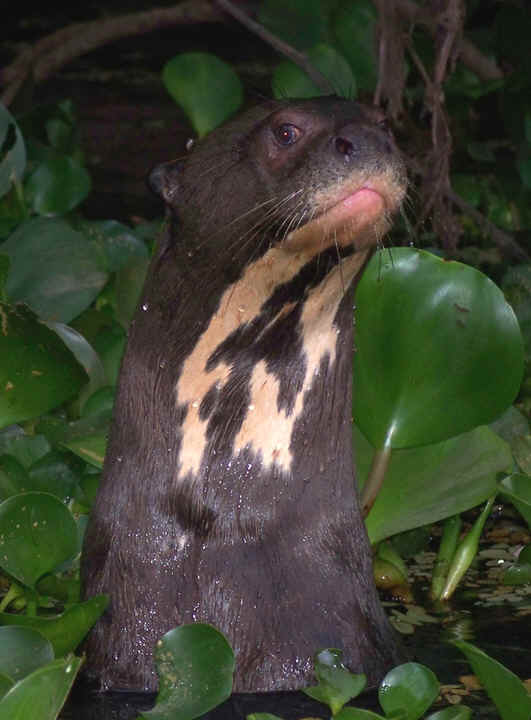 sed, greater and
lesser bulldog, northern ghost, greater sac-winged, chestnut sac-winged, broad-eared freetail, and
tent-making bats), and jaguar - quite a few reptiles -
bushmaster, boa constrictor, rainbow boa, black-skinned parrot snake, Amazonian ringed snake, yellow-footed tortoise,
and twist-necked turtle - and countless species of
butterflies. The diversity of plants and the structure of the pristine
forest is remarkable. Though it at first appears as a rather homogenous
mass of green, with a little time, the microhabitats and the specialists that
inhabit them reveal themselves. The forest floor is one of the richest
and often most-overlooked sites. The bamboo thickets sometimes resemble a
really bad hair day in which your wild hair is crawling with busy birds.
The canopy, where sunlight, fruits, and flowers abound always has something
going on if you have the neck and back endurance for it.
sed, greater and
lesser bulldog, northern ghost, greater sac-winged, chestnut sac-winged, broad-eared freetail, and
tent-making bats), and jaguar - quite a few reptiles -
bushmaster, boa constrictor, rainbow boa, black-skinned parrot snake, Amazonian ringed snake, yellow-footed tortoise,
and twist-necked turtle - and countless species of
butterflies. The diversity of plants and the structure of the pristine
forest is remarkable. Though it at first appears as a rather homogenous
mass of green, with a little time, the microhabitats and the specialists that
inhabit them reveal themselves. The forest floor is one of the richest
and often most-overlooked sites. The bamboo thickets sometimes resemble a
really bad hair day in which your wild hair is crawling with busy birds.
The canopy, where sunlight, fruits, and flowers abound always has something
going on if you have the neck and back endurance for it.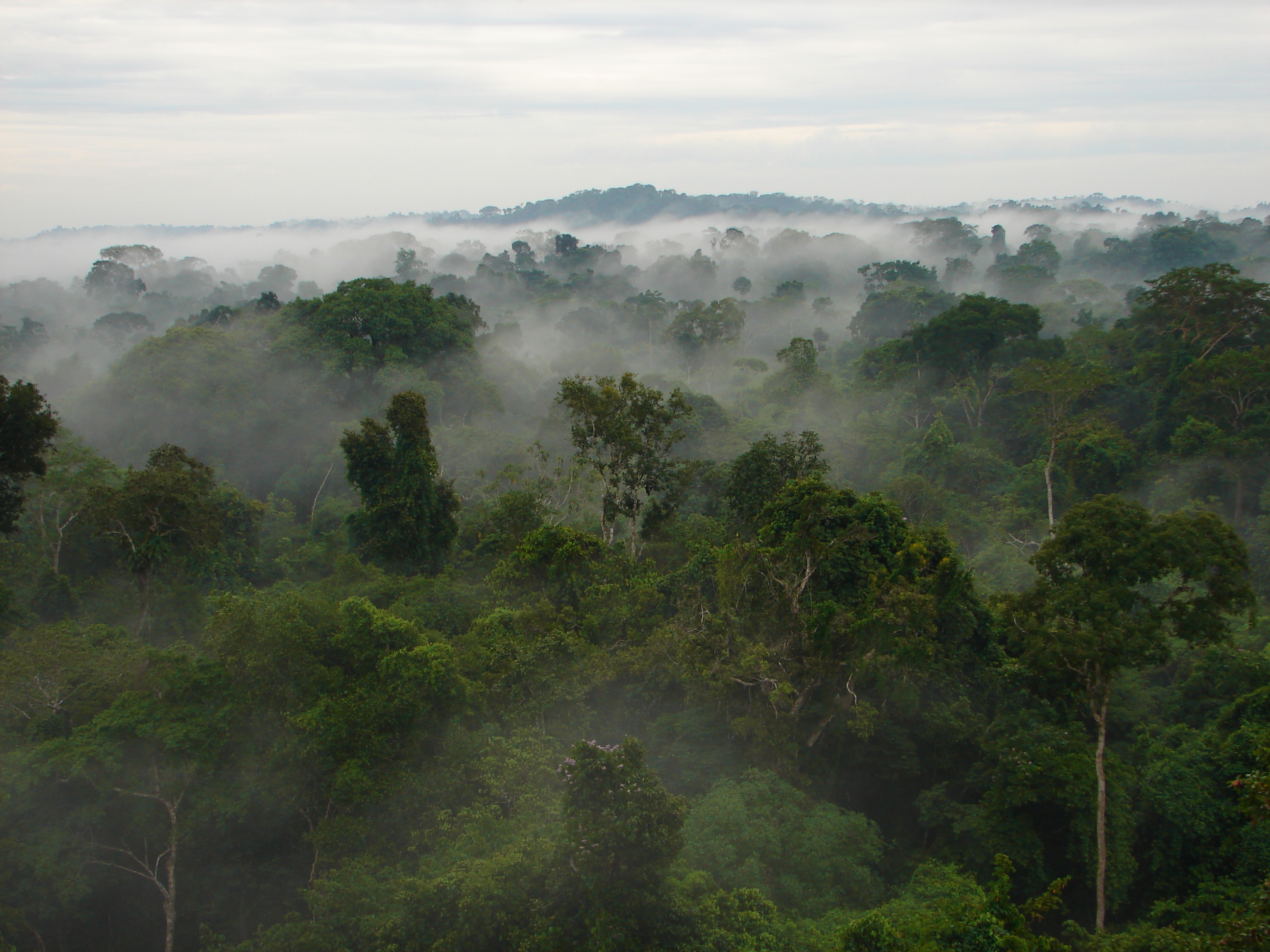 most likely to be perched atop one of the
many small trees while skulking low in the bushes are rusty-backed antwren,
rufous-winged antshrike, collared crescentchest, and
rufous-sided pygmy-tyrant. Coal-crested finches travel in small groups,
Chapada and Suiriri flycatchers, plain-crested elaenia, and cinnamon tanager sometimes pass through,
various parrots pass overhead, occasionally stopping at a fruiting tree, and
noisy curl-crested jays come by in family groups. The uncommon checkered
woodpecker is sometimes seen as well. Red-legged seriema, whose calls are heard just about every
morning here, are sometimes seen walking along or across the road as red-and-green
macaws, crane and white-tailed hawks, and yellow-headed caracara pass
overhead.
most likely to be perched atop one of the
many small trees while skulking low in the bushes are rusty-backed antwren,
rufous-winged antshrike, collared crescentchest, and
rufous-sided pygmy-tyrant. Coal-crested finches travel in small groups,
Chapada and Suiriri flycatchers, plain-crested elaenia, and cinnamon tanager sometimes pass through,
various parrots pass overhead, occasionally stopping at a fruiting tree, and
noisy curl-crested jays come by in family groups. The uncommon checkered
woodpecker is sometimes seen as well. Red-legged seriema, whose calls are heard just about every
morning here, are sometimes seen walking along or across the road as red-and-green
macaws, crane and white-tailed hawks, and yellow-headed caracara pass
overhead. 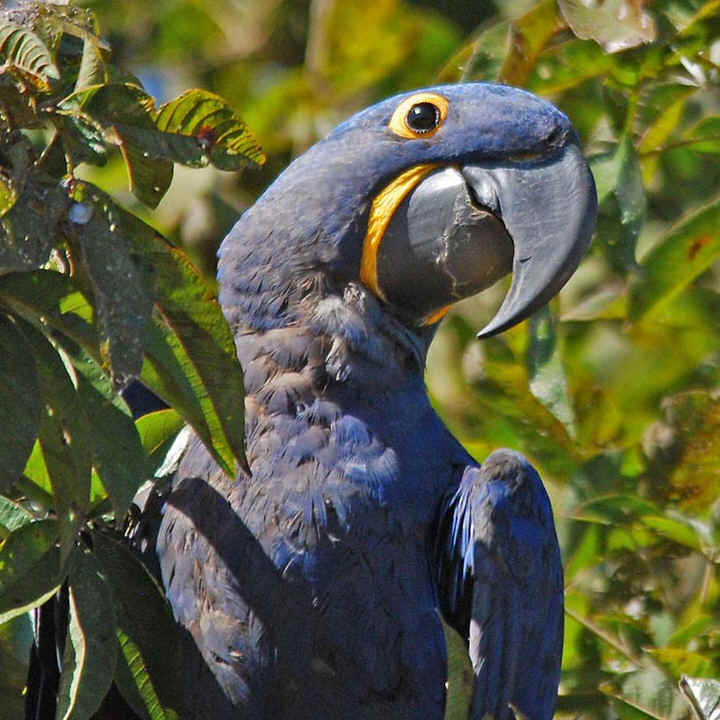 life
life